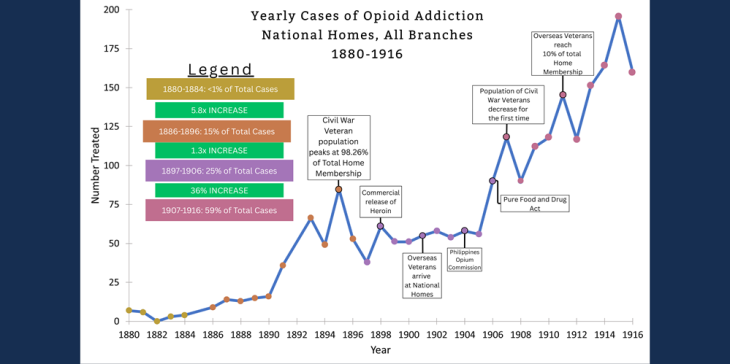
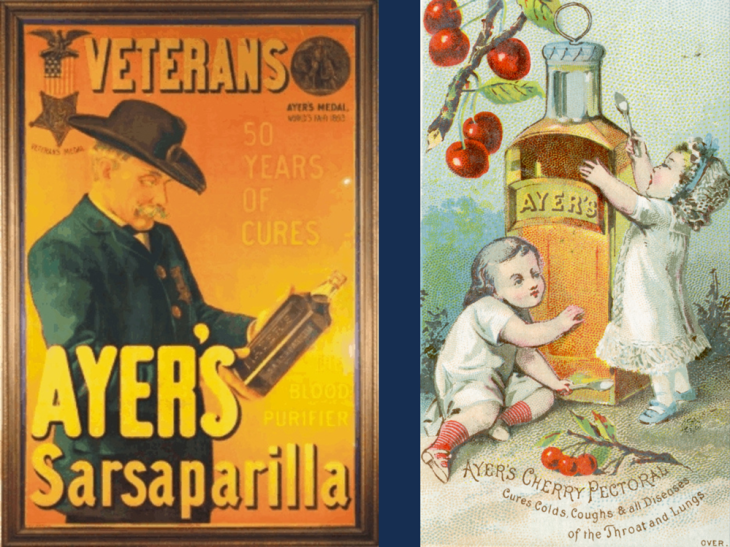
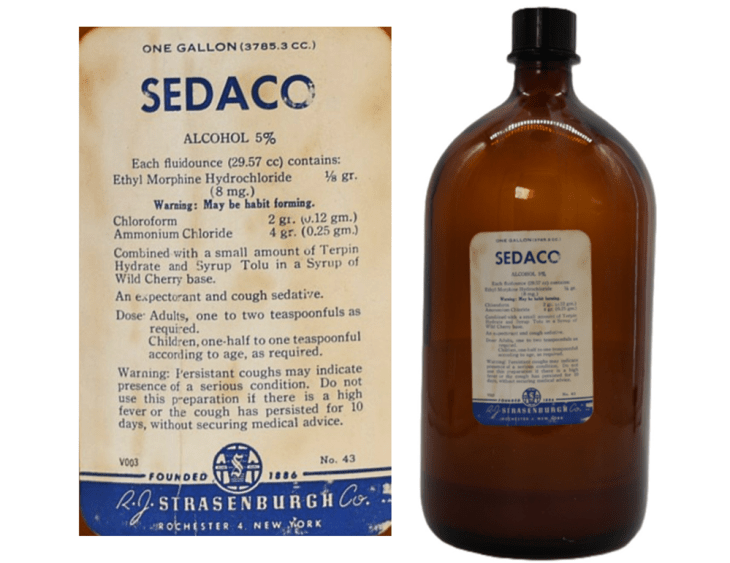
Between 1880 and 1916, the National Home for Disabled Volunteer Soldiers treated a significant number of veterans suffering from opioid addiction, known at the time as morphinism. This issue traces back to the Civil War, where many veterans developed addiction to opioids. While the National Homes initially catered primarily to Civil War veterans, the demographic shifted over time, with an increasing number from subsequent conflicts, notably the Spanish-American War and World War I.
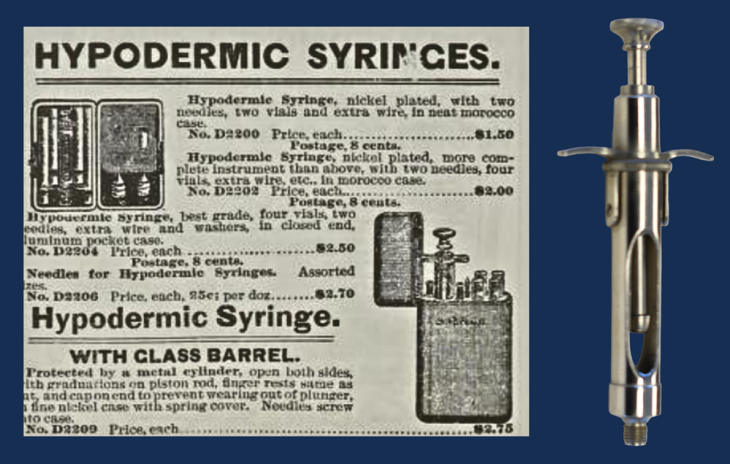
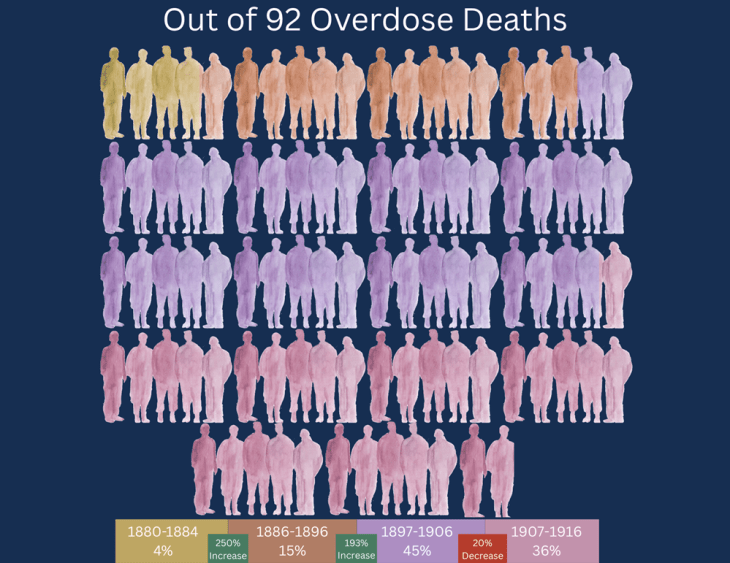
Addiction was recognized as a medical condition as early as 1871, and by 1880, annual reports documented cases and overdose deaths. Treatment methods included medications and early forms of electrotherapy. The highest annual increase in treatment cases occurred from 1886 to 1896, with a notable rise in overdose deaths, particularly after heroin was introduced in 1898. Despite the growing number of cases, treatment approaches evolved, especially after the 1906 Pure Food and Drug Act mandated clearer labeling of medicinal products.
The increase in overseas veterans coincided with a tripling of opioid cases, underscoring a complex interplay of factors that contributed to opioid addiction among veterans during this period. The historical context highlights the National Homes’ struggle to manage America’s second opioid crisis.